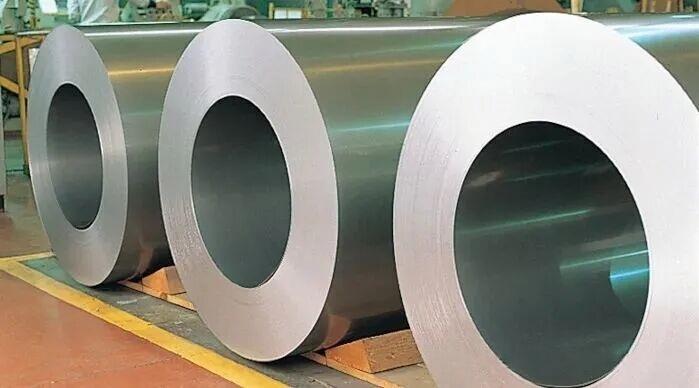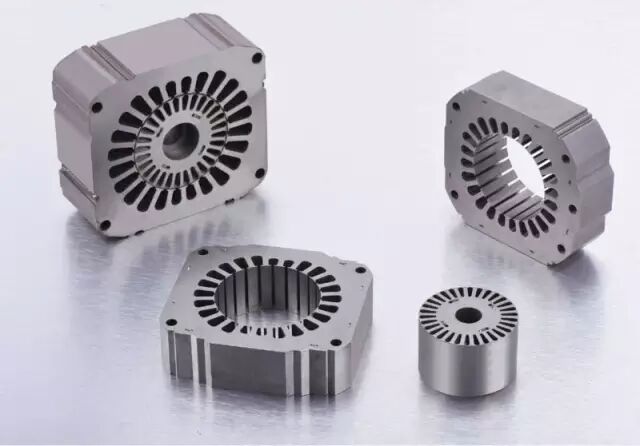
Every efficient motor starts with the right steel. The laminated cores of stators and rotors are made from electrical steel, a material engineered to carry magnetic flux with minimal loss. Choosing the grade, thickness, and coating is one of the few decisions that affects both the cost of motor lamination stamping and the efficiency class the finished motor can reach. This guide summarizes what matters for motor factories.
Why motors need special steel
A motor core must channel magnetic flux with minimal loss. Ordinary carbon steel fails here: its high hysteresis loss turns valuable magnetic energy into heat. Electrical steel solves this with two features. First, silicon or aluminum content, up to about 3.2 percent, which raises electrical resistivity and lowers eddy current loss. Second, the core is built from thin insulated laminations, so eddy currents cannot circulate freely. Every motor lamination, whether stamped for a washing machine motor, an industrial fan, or a drone motor, follows the same principle.
What the grade numbers mean
Electrical steel grades are classified by core loss at a reference induction and frequency, measured in watts per kilogram. Common systems include the M grades used in North America, such as M250-35A, and the Chinese GB system, such as 35WW250, where the numbers encode thickness and maximum loss. Three practical tiers cover most motor programs:
1. Standard grades, around 0.5 mm with higher loss. Adequate for fractional horsepower motors, fans, and cost-sensitive appliance applications. 2. Mid grades, the workhorse tier for IE2 and IE3 industrial motors and most home appliance motors. 3. High grades, thin gauges of 0.35, 0.27, and 0.20 mm and below, required for IE4 and higher efficiency, EV traction motors, and high speed designs.
The rule of thumb: the higher the operating frequency and the tighter the efficiency target, the better the grade and the thinner the steel you need.
Thickness: the efficiency lever
Thinner laminations cut eddy current loss roughly with the square of thickness, which is why EV and high-speed motor cores use 0.27 mm or thinner material. But thin gauge creates real production challenges. The strip is harder to feed without wrinkles, dies must hold tighter clearances, and burr height becomes more critical, because a burr that shorts the insulation between 0.2 mm laminations destroys the benefit of the thin gauge. Stamping and handling processes must be designed for the material, not the other way around.
Coatings
Electrical steel comes with surface insulation coatings, from thin organic or inorganic layers to thicker C5 coatings for demanding applications. The coating provides interlamination insulation and corrosion protection. For motors that undergo annealing or welding after stacking, coating compatibility with the downstream process matters as much as its insulation value.
What drives the cost
For motor manufacturers, the cost of the core is dominated by four factors: the steel grade itself, with high grades priced at a significant premium; the yield of the stamping process, because nested progressive dies can push material utilization high while simple blanking wastes strip; tooling cost and life, since harder thin-gauge grades wear dies faster; and volume. When comparing suppliers, evaluate total cost per finished lamination, not just price per ton.
How the material shapes the stamping line
The steel choice directly defines the requirements of the lamination stamping line. Thin, high-grade material calls for servo feeders with precise tension control, mist or dry-film lubrication instead of flood oil, in-die sensing to protect the tool, and automated stacking with interlock or weld control. Medium and thick grades for appliance and industrial motors run at high stroke rates, where press speed, coil change time, and die change time decide output. A line configured for 0.5 mm standard grades cannot simply run 0.27 mm high-grade steel; it needs different feed, guidance, and stacking technology.
Frequently asked questions
Q: What is the most common thickness for motor laminations? A: 0.5 mm and 0.35 mm cover the majority of industrial and appliance motors. EV traction and high-speed motors use 0.27, 0.20 mm, or thinner.
Q: How much does high-grade electrical steel cost compared to standard grades? A: Thin high-loss-grade material carries a significant premium per ton, but the total core cost depends just as much on stamping yield and tooling life. Evaluate cost per finished lamination instead of per ton.
Q: Can one stamping line run different grades? A: Lines built with servo feeding, quick-change dies, and programmable stacking can switch between grades and lamination designs, but very thin gauges require dedicated feed and die technology.
Q: Does lamination thickness affect motor noise? A: Yes. Thinner, well-insulated laminations with low burr reduce magnetostriction noise and vibration, which matters for home appliance motors in particular.
Q: What is interlock stamping? A: A die technique that forms small dimples to mechanically lock laminations into a stack during the same stroke, enabling fully automatic stacking without separate assembly steps.
Choosing the right steel is a joint decision between motor design and manufacturing. We build motor lamination stamping lines configured around your exact material and stack requirements, from coil feeding and high-speed stamping to in-die stacking and inspection. Send us your lamination drawing and steel specification, and we will propose the line.
Product page: https://www.ldmotortech.com/en/products/stamping